
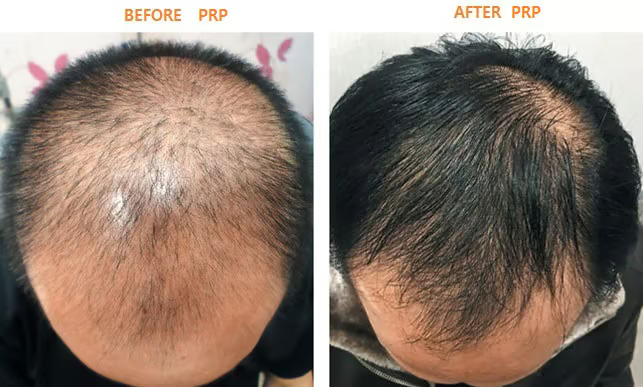
Hair thinning and loss affect many adults, and nonsurgical options can be appealing to those affected. Platelet-rich plasma therapy, often shortened to PRP, is one such option that may be used for people looking to address changes in hair density. Understanding how PRP therapy for hair restoration works and what the process involves can help you decide whether to explore it further with a provider.
What Is PRP Hair Restoration?
PRP therapy is a nonsurgical treatment that uses a concentrated portion of your own blood. Platelets are a type of blood cell that contain growth factors. During the procedure, a small sample of blood is drawn from the arm, similar to a routine blood test. The sample is then placed in a centrifuge, and it spins rapidly to separate the blood into distinct layers. This separation isolates the platelet-rich plasma from other components.
Once the plasma is prepared, a provider injects it into the scalp at the level of the hair follicles. The material comes from your own body, so the treatment avoids the introduction of foreign substances. Sessions are typically brief and performed in an outpatient setting. This means you can return home the same day.
Who Is It For?
PRP therapy for hair restoration may appeal to adults who notice gradual thinning rather than complete hair loss. People in the earlier stages of hair thinning can be viewed as suitable candidates, since active follicles remain present in the treatment area. Both men and women may pursue this option, and it is sometimes chosen by those who prefer to avoid surgical procedures.
Individuals with certain patterns of hereditary hair thinning can find this treatment relevant to their goals. A provider usually reviews your medical history, and they will examine the scalp before recommending a plan. Some health conditions, medications, or scalp concerns may affect whether a person is a good match for the therapy. For this reason, an evaluation with a trained professional helps determine suitability.
Results vary from person to person. PRP is not a solution for every type of hair loss, and areas that are completely bald may respond differently than areas with existing hair. A thorough assessment allows a provider to set realistic expectations, basing them on your individual situation.
What Should You Expect?
The injection portion itself is usually completed within a short period, and the entire visit can last less than an hour. PRP therapy may be delivered across multiple sessions. A typical initial plan can involve several appointments spaced a few weeks apart. After this initial series, some providers recommend periodic maintenance sessions to support ongoing results. The exact schedule depends on your response and the recommendations of your provider.
Following each session, mild tenderness at the injection sites can occur. These effects tend to be temporary. People typically resume their normal activities shortly after the appointment, but a provider may offer specific guidance on scalp care. Because the outcomes develop gradually, changes in hair appearance are usually observed over a span of weeks to months.
Seek PRP Therapy for Hair Restoration
PRP therapy represents one of several nonsurgical approaches available to adults exploring options for hair thinning. As with any treatment, outcomes depend on individual factors such as the stage of hair thinning, overall health, and adherence to the recommended schedule. A professional evaluation helps establish a plan suited to your specific needs, and it can provide accurate information about what the therapy involves.