
Tattoo removal involves a series of treatments that reduce the visibility of ink on the skin. The procedure typically uses laser technology in clinical settings, applying protocols that prioritize patient safety and comfort. Factors such as ink color, tattoo age, depth, and individual skin characteristics influence treatment outcomes. Sessions are spaced out over time to allow for skin recovery and gradual fading of the tattoo. For safe and effective care, dermatology professionals provide guidance on each step of the process.
How Does Tattoo Removal Work?
Laser tattoo removal uses highly concentrated light energy to break down ink particles beneath the skin surface. The device emits precise pulses of laser light that are absorbed by the tattoo pigments. This absorption causes the ink to fragment into smaller pieces, which the body gradually removes through natural processes.
Removal outcomes depend on several specific factors. The type and color of ink affect results, with dark tones typically responding most effectively. The depth and age of the tattoo, ink composition, and individual skin features also play significant roles in the removal process.
Multiple treatment sessions are generally required. Each session is spaced several weeks apart, allowing the skin to recover and the body to process the fragmented ink. With every visit, practitioners assess the tattoo’s fading and adjust the approach as needed. Total removal is not always attainable, as certain inks or tattoo characteristics may leave some residue visible.
What Is Treatment Like?
Each session begins with the cleansing of the treatment area. A topical numbing agent is applied, aiming to reduce discomfort during the procedure. Practitioners may start with a test spot of laser energy on a small section to gauge skin response and adjust settings appropriately.
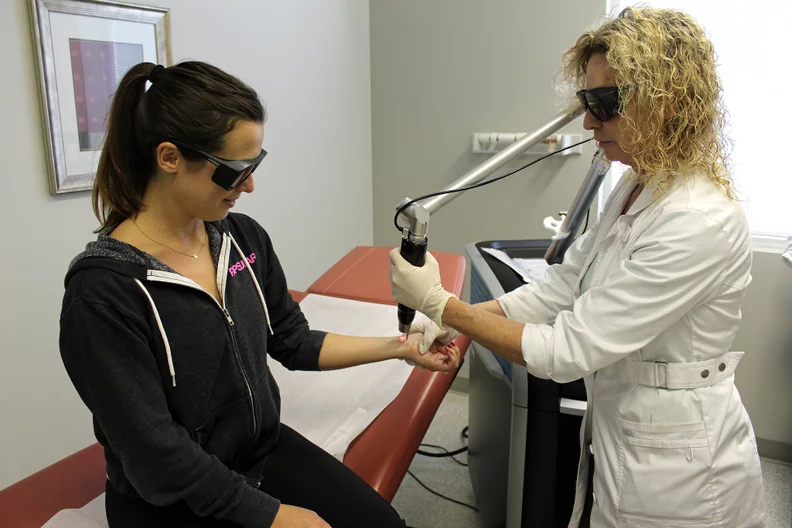
Both the patient and practitioner use protective eyewear to shield against laser exposure. The practitioner operates a handheld device, delivering short bursts of laser energy directly to the tattoo. The sensation during treatment is commonly described as comparable to a rubber band snapping against the skin.
Treatments are scheduled with sufficient time between visits to support the natural healing of skin and the clearing of ink particles. The total number of sessions depends on the tattoo’s characteristics. Factors that influence the number of sessions include the amount of pigment and ink color.
What Does Recovery Entail?
Following treatment, the area is likely to display redness, swelling, and tenderness. Blistering or scabbing can occur as the skin reacts and heals. Practitioners provide detailed aftercare guidance, focusing on maintaining skin cleanliness and gentle protection during the early stage of healing. A sterile dressing may be suggested for the first few days, along with the use of a topical ointment to create a supportive environment for recovery.
People are typically instructed to avoid exposing the area until the skin heals. Preventing sun exposure on treated skin is a major component of recovery, as ultraviolet light can increase sensitivity and risk of pigment changes. Typical aftercare concerns include monitoring the site for unusual changes or discomfort and following up with the practitioner for any questions throughout the process.
Meet With a Dermatologist
Meeting with a dermatologist is the recommended first step when seeking tattoo removal. At the consultation, ask about the type of laser recommended, expected number of sessions, aftercare policies, and any risks or possible side effects related to your skin type or tattoo. This helps clarify each step of your potential treatment and builds a foundation of knowledge for informed decision-making.